Norman Keith Collins, better known as Sailor Jerry, is one of the most influential names in twentieth-century Western tattooing. He did not invent American traditional tattooing, and the style does not trace back to one person. He worked within a much larger network of tattooists whose flash, techniques and shop culture developed across American port cities.
Who was Sailor Jerry?
Collins was born in 1911. During his early years travelling and working around the Great Lakes, he learned electric tattooing from Chicago tattooist Gibs “Tatts” Thomas. He later settled in Honolulu in the 1930s and became closely associated with the city's tattoo scene.
Why Honolulu mattered
Honolulu was a major tattoo centre, especially during the Second World War, when military personnel passed through the city in huge numbers. Sailor Jerry was one notable artist among several working in that wider culture, not the sole source of it.
What made Collins influential?
He was known for strong drawing, technical experimentation and exchanging designs and ideas with other tattooists. Tattoo Archive records that he made rubbings of new designs and mailed them to friends, part of the way tattooers shared visual ideas before digital reference libraries existed.
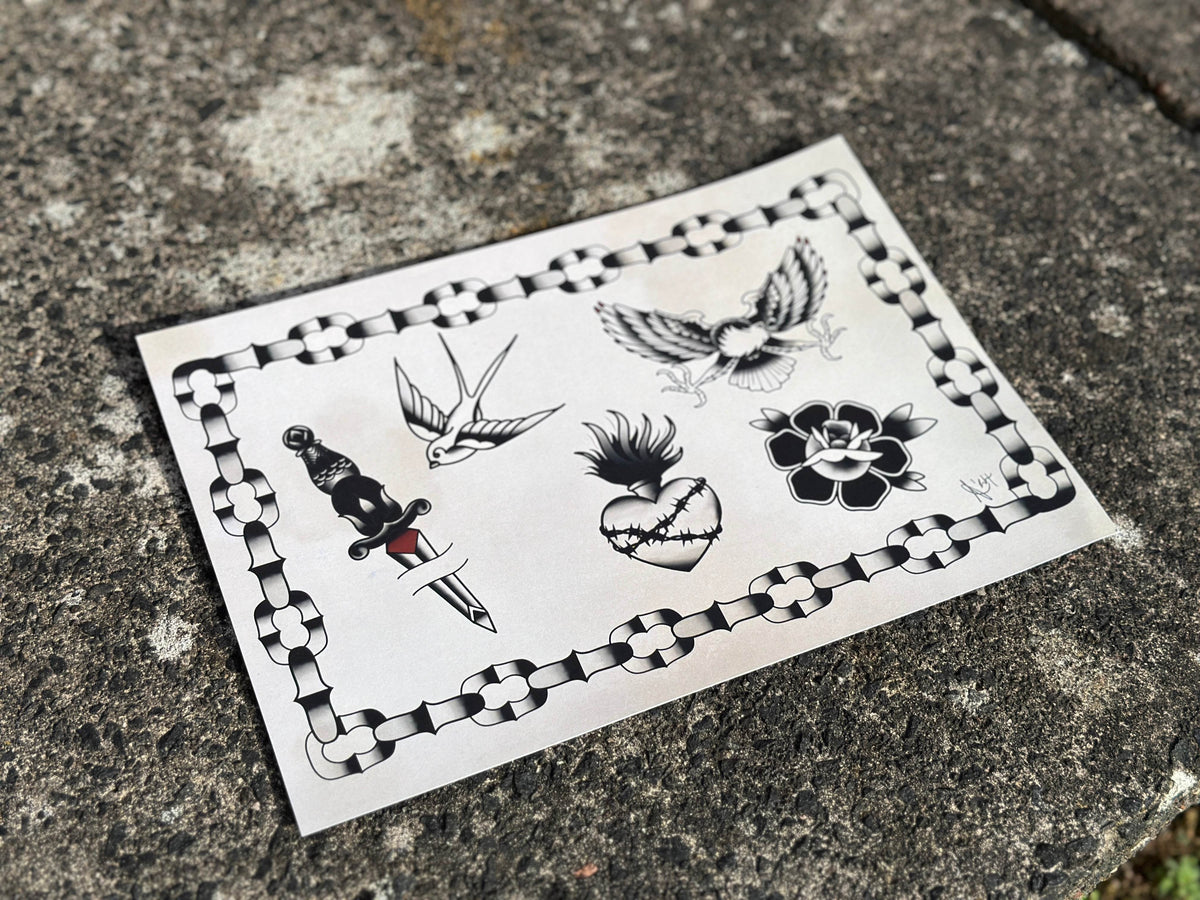
His surviving flash shows the bold outlines, compact composition and clear colour relationships now strongly associated with American traditional work. Those qualities were also present in work by other influential tattooists of the period.
Why his name still matters
Collins became an important bridge between generations of tattooers, and his work remains a major reference point for traditional flash. The more accurate story is better than the myth: American traditional tattooing was built by many working tattooists, and Sailor Jerry was one of its most significant figures.
Read What Is Tattoo Flash? and our Traditional Tattoo Motifs guide, or browse Tattoo Flash Prints.